Line Clearance: Protecting Power, Preventing Hazards
Have you ever noticed crews trimming trees around power lines, or wondered why a specific tree was removed near utility infrastructure? This isn’t just about aesthetics; it’s a critical safety and reliability practice known as line clearance (or vegetation management).
Line clearance is the strategic trimming, pruning, or removal of trees and other vegetation that could interfere with electrical power lines and equipment. It’s a complex, ongoing effort undertaken by utility companies and their contractors to ensure the safe and reliable delivery of electricity.
Why is Line Clearance So Important?
The reasons behind robust line clearance programs are multifaceted, impacting everything from your daily power supply to public safety.
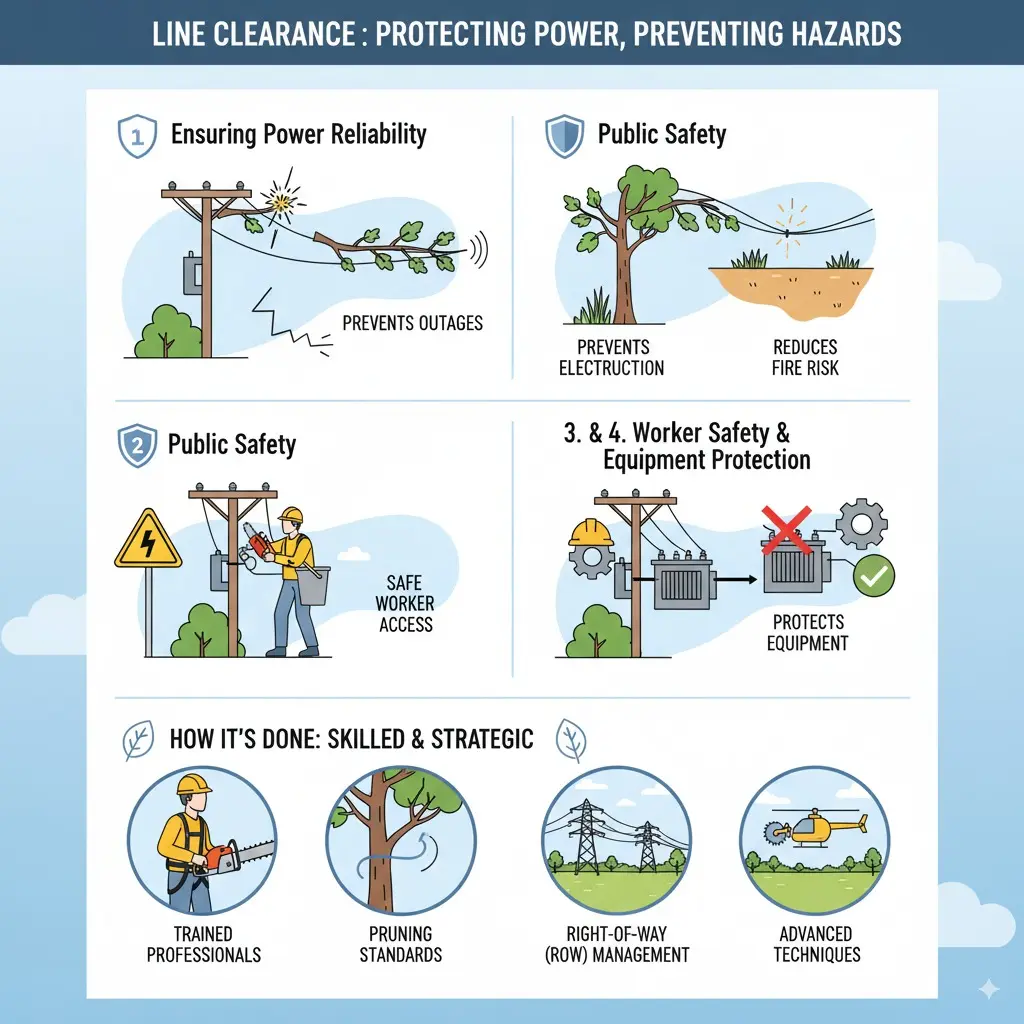
- Ensuring Power Reliability:
- Preventing Outages: Tree branches coming into contact with power lines are a leading cause of power outages, especially during storms with high winds, heavy rain, snow, or ice. Even slight contact can cause faults, while falling limbs can snap lines and poles.
- Minimizing “Blips” and Surges: Intermittent contact from swaying branches can cause momentary power fluctuations (“blips”) that, while not full outages, can disrupt sensitive electronics and cause inconvenience.
- Public Safety:
- Preventing Electrocution: Live power lines are incredibly dangerous. If a tree branch brings a live wire to the ground, or if someone tries to prune a tree too close to a line, there’s a serious risk of electrocution. Line clearance reduces the chances of such hazardous situations.
- Reducing Fire Risk: When vegetation contacts power lines, especially during dry conditions, it can create sparks and arc faults, potentially igniting fires. This is a significant concern in wildfire-prone areas.
- Worker Safety:
- Utility workers need clear access to lines and equipment for maintenance, repairs, and upgrades. Overgrown vegetation can hinder their work and create unsafe conditions.
- Equipment Protection:
- Falling branches or trees can damage expensive utility equipment like transformers, poles, and insulators, leading to costly repairs and extended outage times.
How is Line Clearance Performed?
Line clearance is not just random chopping. It’s a highly skilled and regulated practice:
- Trained Professionals: Work is performed by certified arborists and trained line clearance technicians who understand both tree biology and electrical safety.
- Pruning Standards: Trimming is done according to specific ANSI (American National Standards Institute) A300 pruning standards, which dictate methods that promote tree health while achieving necessary clearance. This often involves directional pruning, guiding growth away from lines, rather than just topping the tree.
- Danger Tree Removal: Trees that are dead, diseased, leaning dangerously, or have an unstable structure and pose an imminent threat to lines are often removed entirely.
- Right-of-Way (ROW) Management: Utility companies maintain specific “rights-of-way” – corridors of land beneath and around power lines where vegetation is actively managed to prevent encroachment.
- Advanced Techniques: Crews use a variety of tools, from hand saws and chainsaws to bucket trucks, chippers, and even specialized equipment for hard-to-reach areas. In some rural or remote areas, helicopters might even be used for specialized trimming.
What You Can Do
As property owners, you have a role in line clearance as well:
- “Call Before You Clear”: Never attempt to trim trees near power lines yourself. It’s extremely dangerous. Always contact your utility company. They will either do it for you (if it’s in their right-of-way) or advise you on safe practices.
- Plant Wisely: When planting new trees, consider their mature height and width. Choose “right tree, right place” by selecting species that won’t grow into power lines.
- Report Issues: If you see a tree branch touching a power line, a leaning tree that looks like it might fall, or any vegetation concern near utility equipment, report it to your local utility company immediately.